Resources and Guides That Answer your insomnia and sleep questions
Search for resources and guides
Curious about how what you’re reading applies to your particular situation? Book a free consultation where we can figure that out.
Insomnia is the one condition where the standard cultural advice — try harder, optimize more, add another protocol to your stack — reliably makes things worse. People who have spent years adding to their wind-down routine are not failing at sleep because they haven't tried enough. The trying itself is the wakefulness.
Two BC psychiatrists say the province is failing people with insomnia. CBT-I is the recommended treatment — and you don't need a referral to access it.
Healthcare workers, first responders, teachers, and managers face some of the highest insomnia rates of any occupations in Canada. Here's why certain jobs create sleep problems, and why CBT-I is the treatment that actually addresses them.
You've done everything right: dark room, no screens, no caffeine. And you're still awake. If sleep hygiene isn't working for your insomnia, it's not because you're doing it wrong. It's because sleep hygiene was never designed to treat chronic insomnia. Here's what the research says, and what actually works.
If you're considering CBT-I for insomnia, the cost question usually comes up fast. MSP won't cover it, but extended health benefits often will — and CBT-I's short, structured format makes it one of the more benefits-friendly treatments available. Here's what to know before you call your insurer.
Sleep difficulties affect 40 to 60% of women during the menopausal transition, making menopause insomnia one of the most common and least discussed symptoms of this stage of life. The good news: this isn't something you simply have to endure.
If someone in your family has always been a terrible sleeper, you've probably wondered whether you inherited more than just their nose. The science has a real answer. Genetics plays a role in insomnia — but a smaller and more nuanced one than most people assume. Here's what the research actually shows, and why it matters for treatment.
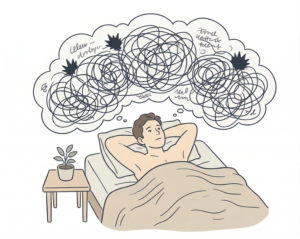
You've been exhausted all evening, but the moment your head hits the pillow, your brain launches into overdrive. This isn't a flaw. It's a learned pattern called conditioned arousal, and it can be unlearned. Here's what's actually happening and what works to change it.
You've probably heard that everyone needs eight hours, that insomnia will go away once your stress does, or that sleeping in on the weekend will fix everything. None of that is true and some of it is making your sleep worse. Here are five insomnia myths worth letting go of, and what actually works instead.
Over a third of adults wake up in the middle of the night three or more times a week. If 3am has become your unwanted alarm clock, understanding what's actually driving it (and what keeps the pattern going) is the first step toward fixing it. This post breaks down the science behind middle-of-the-night waking, when to worry, and what evidence-based treatment can do that sleep hygiene tips can't.
If you live with insomnia, chances are you’ve tried the most intuitive solution already: going to bed earlier and staying in bed longer. Ironically, this often leads to less sleep. Enter the concept of "time in bed restriction," a key component of Cognitive Behavioural Therapy for Insomnia (CBT-I). This structured approach helps rebuild healthy sleep drive and strengthens the association between bed and sleep. Discover how adjusting your time in bed can transform your nights, restore trust in sleep, and ultimately lead to more restful slumber. Ready to reclaim your sleep? Let’s explore how CBT-I can help.
Are you tired of tossing and turning, wondering how to cure your insomnia? You’re not alone. Many people struggle with sleepless nights despite trying various remedies. But not all treatments are created equal. Discover the clear hierarchy of insomnia treatments, from the gold standard of CBT-I to the limitations of medication and sleep hygiene. Learn why understanding these rankings can save you time and frustration, and find out how to choose the right approach for your unique situation. Don’t let insomnia control your life; explore effective solutions that work.