CBT-I for Insomnia in Abbotsford
Cognitive Behavioural Therapy for Insomnia is the first-line treatment recommended by every major sleep medicine body worldwide. It is available online to Abbotsford residents through BC CBT-I.
Are you a clinician? Refer a patient here
4 in 5
patients improve their sleep with CBT-I
Registered Clinical Counsellor
Virtual sessions available across B.c.
Flexible fees & Insurance accepted
Backed by Hundreds of studies
Online CBT-I for Abbotsford residents
Cognitive Behavioural Therapy for Insomnia isn't sleep hygiene tips or relaxation podcasts. It's a structured, short-term therapy that targets the root causes of why you can't sleep, not just the symptoms.
Instead of relying on pills that stop working, CBT-I retrains the patterns that keep insomnia going. It works by rebuilding your body's natural ability to sleep.
Whether you are a nurse winding down from 12-hour night shift at Abbotsford Regional Hospital, a UFV student trying to quiet a racing mind after a late-night study session, or a local farmer stuck worrying late into the night, standard sleep advice isn't enough. Our virtual CBT-I therapy tailors itself to the factors unique to living in the Fraser Valley.
Rebuild your sleep drive
Your body has a natural pressure to sleep. Insomnia disrupts it. We restore it so sleep comes naturally again.
Break the bed-wakefulness connection
Your brain has learned to associate bed with being awake. We reverse that so your bed means sleep again.
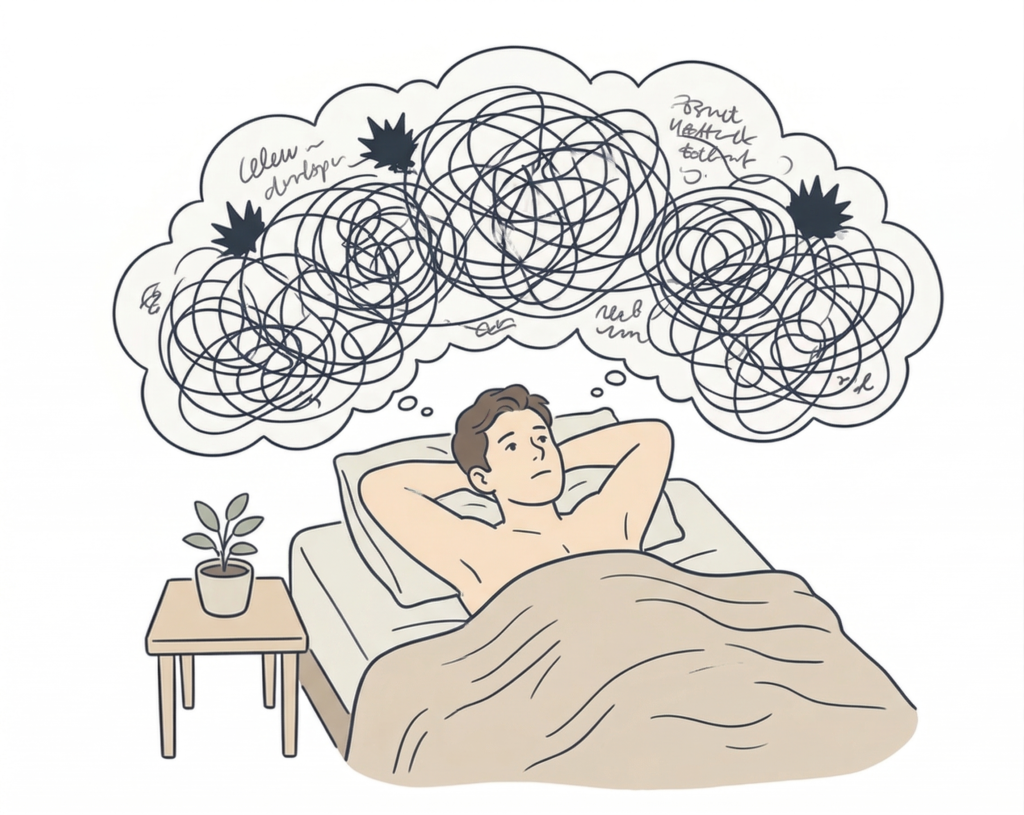
Quiet the racing mind
The worry, the clock-watching, the dread of another bad night. We address the thought patterns that fuel insomnia.
At BC CBT-I, we integrate CBT-I with Acceptance and Commitment Therapy (ACT) for the most effective, flexible approach to restoring your sleep.
Who this affects in Abbotsford
Abbotsford runs around the clock.
Sleep is usually what pays for it.
Health care, federal corrections, aerospace maintenance at the airport, agriculture and the Highway 1 freight corridor all depend on people working outside daylight hours. Shift work does not cause insomnia by itself. What it does is strip away the margin that normally protects sleep, so when something else goes wrong, a stressful stretch, an injury, a new baby, the bad nights settle in and stay.
Hospital and health authority staff
Fraser Health is one of the city's largest employers, and Abbotsford Regional Hospital runs continuously. Nurses, care aides and allied staff rotating through days, evenings and nights lose sleep on the turnaround, then find it does not come back on days off.
Police, fire and paramedics
Abbotsford Police Department, Abbotsford Fire Rescue and BCEHS crews finish shifts with arousal still elevated. That post-shift wind-down failure is the exact mechanism that converts occasional bad nights into chronic insomnia.
Federal corrections staff
Correctional Service Canada operates several institutions in Abbotsford. Rotating schedules combined with sustained vigilance on shift produce the same pattern seen in first responders, and the same treatment applies.
Agriculture, processing and freight
Dairy and poultry operations start before dawn. Processing plants and freight along Highway 1 run overnight. Early starts cut sleep from the front end, and seasonal peaks make the schedule impossible to plan around.
One distinction that changes the treatment
Shift work can produce a circadian problem, insomnia, or both at once. They look similar from the inside and they need different treatment. Sleep restriction is the most powerful tool in CBT-I, and applied to someone whose actual problem is circadian misalignment, it makes things worse.
Sorting out which one you have is the first thing we do, before any part of the protocol starts. Read how the two are told apart, or see which jobs in BC carry the highest insomnia rates.
Most of these plans already cover it
- Health authority, municipal and school district plans in BC are commonly administered through Pacific Blue Cross or Sun Life. BC CBT-I direct bills both, so there is nothing to submit and nothing to wait for.
- Federal employees, including Correctional Service Canada staff, are covered under the Public Service Health Care Plan, which lists counsellors as eligible practitioners where the administrator recognises the provincial credential, within a combined annual maximum of $5,000 for psychological services.
- Sessions are delivered by a Registered Clinical Counsellor (RCC #21951), the designation most BC extended health plans cover. Sessions are also GST exempt.
- If your plan is not on the direct billing list, you pay at the session and submit the receipt for reimbursement. Here is exactly what to ask your provider before you book.

Your Therapist
Graeme Thompson, RCC
Having Grown Up in Abbotsford, I started BC CBT-I because there is a glaring need for qualified sleep therapists in the Fraser Valley. I’ve seen the life-changing difference it makes when someone finally overcomes their insomnia. It’s the difference between surviving and actually thriving.
I’m excited to be part of that transformation with you.
This isn't alternative medicine.
It's the most researched treatment for insomnia in the world. Every major medical guideline recommends it.
"CBT-I should be the first-line treatment for all adults with chronic insomnia."American College of Physicians, Annals of Internal Medicine
"Strong recommendation for CBT-I as the treatment of choice for insomnia disorder."World Sleep Society Position Statement, Sleep Medicine (2023)
"CBT-I is now unequivocally recommended as first-line treatment for insomnia."European Sleep Research Society, Journal of Sleep Research (2023)
Three steps to better sleep.
Book a free consult
A 15 minute conversation to understand your sleep challenges and see if CBT-I is right for you. No commitment, no pressure.
Start your personalized program
We'll track your sleep data and build a treatment plan tailored to you. Weekly sessions, online, on your schedule.
Sleep again
Most people see meaningful improvement within 6 to 8 sessions. The skills you learn stay with you. No ongoing medication, no dependency.
You Don't Have to Keep Living Like This
Book a free consultation and let’s talk about how CBT-I can help you sleep again.
Frequently asked questions
About CBT-I and online therapy in Abbotsford, British Columbia.