CBT-I for Insomnia in Kelowna
Cognitive Behavioural Therapy for Insomnia is the first-line treatment recommended by every major sleep medicine body worldwide. It is available online to Kelowna residents through BC CBT-I.
Are you a clinician? Refer a patient here
4 in 5
patients improve their sleep with CBT-I
Registered Clinical Counsellor
Virtual sessions available across B.c.
Flexible fees & Insurance accepted
Backed by Hundreds of studies
Online CBT-I for Kelowna residents
Cognitive Behavioural Therapy for Insomnia isn't sleep hygiene tips or relaxation podcasts. It's a structured, short-term therapy that targets the root causes of why you can't sleep, not just the symptoms.
Instead of relying on pills that stop working, CBT-I retrains the patterns that keep insomnia going. It works by rebuilding your body's natural ability to sleep.
Rebuild your sleep drive
Your body has a natural pressure to sleep. Insomnia disrupts it. We restore it so sleep comes naturally again.
Break the bed-wakefulness connection
Your brain has learned to associate bed with being awake. We reverse that so your bed means sleep again.
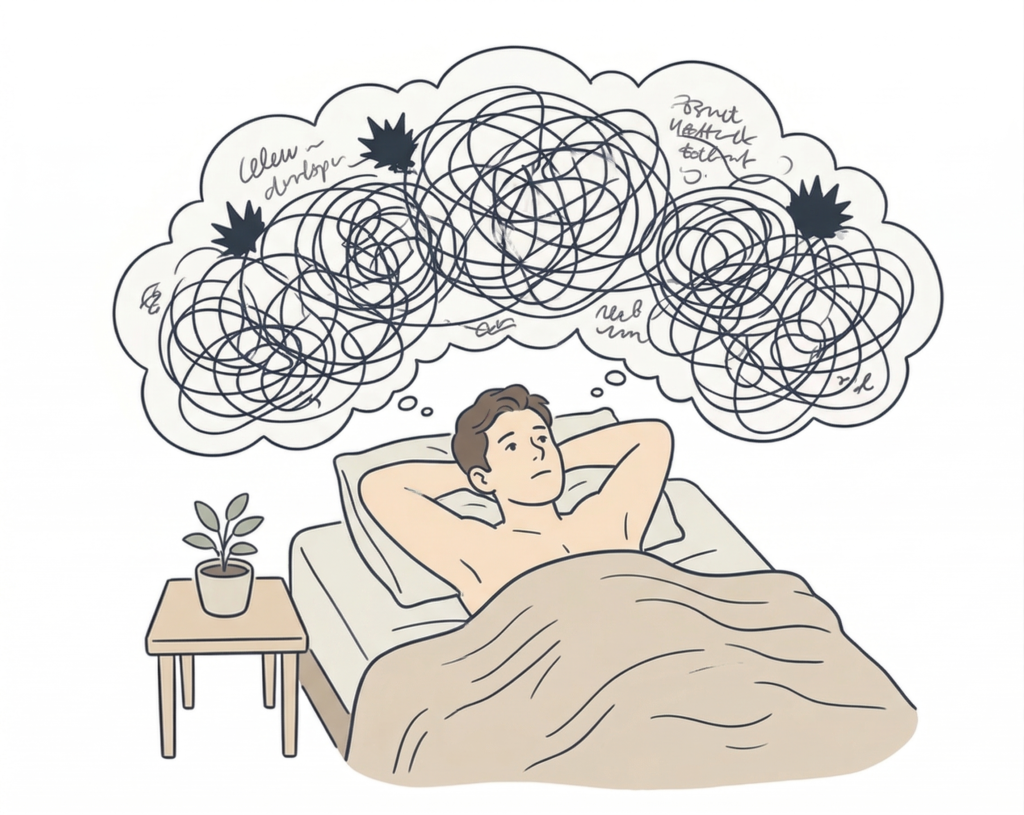
Quiet the racing mind
The worry, the clock-watching, the dread of another bad night. We address the thought patterns that fuel insomnia.
At BC CBT-I, we integrate CBT-I with Acceptance and Commitment Therapy (ACT) for the most effective, flexible approach to restoring your sleep.
Who insomnia affects in Kelowna
Here, sleep problems start seasonal.
Then they stop being seasonal.
Interior Health runs its head office in this city, and Kelowna General is the tertiary hospital for the whole Interior. Outside health care, the valley's work rises and falls with the calendar: tourism and hospitality through summer, harvest and crush in the fall, wildfire response through the same stretch. And the Thompson-Okanagan has an older population than the provincial average. Each of those opens a different route into chronic insomnia, and each one needs a different first move.
Interior Health and hospital staff
Interior Health employs around 21,000 people across the region and is one of the largest employers in the city. Nurses, care aides and allied staff rotating days to nights lose sleep on the turnaround, and being the referral hospital for the Interior means the acuity does not drop overnight.
Wildfire and emergency response
Fire crews, dispatchers, RCMP members, Kelowna Fire and BCEHS work hardest in the months the valley is busiest. Long deployments, night operations and sleeping in camp remove routine entirely. Then the season closes, the deployment ends, and sleep often does not return with it.
Tourism, hospitality and agriculture
Restaurants, hotels and tasting rooms run late through summer, then the work thins out. Orchards start before dawn and wineries run through the night during crush. A schedule that resets every few months gives the body clock nothing stable to hold onto.
Older adults on long-term sleep medication
Long-term zopiclone and benzodiazepine use concentrates in people over 65, and this region skews older than the province. The medication often stopped working years ago, but stopping it produces a rebound that feels like proof it was still needed. Both of those can be true at once.
On that last one: prescribing and tapering stay with your doctor. What happens here is the behavioural side, sequenced so that sleep is already improving before the dose starts coming down. How a supported taper is sequenced, and how CBT-I compares to medication over time.
Smoke season is not the same thing as insomnia
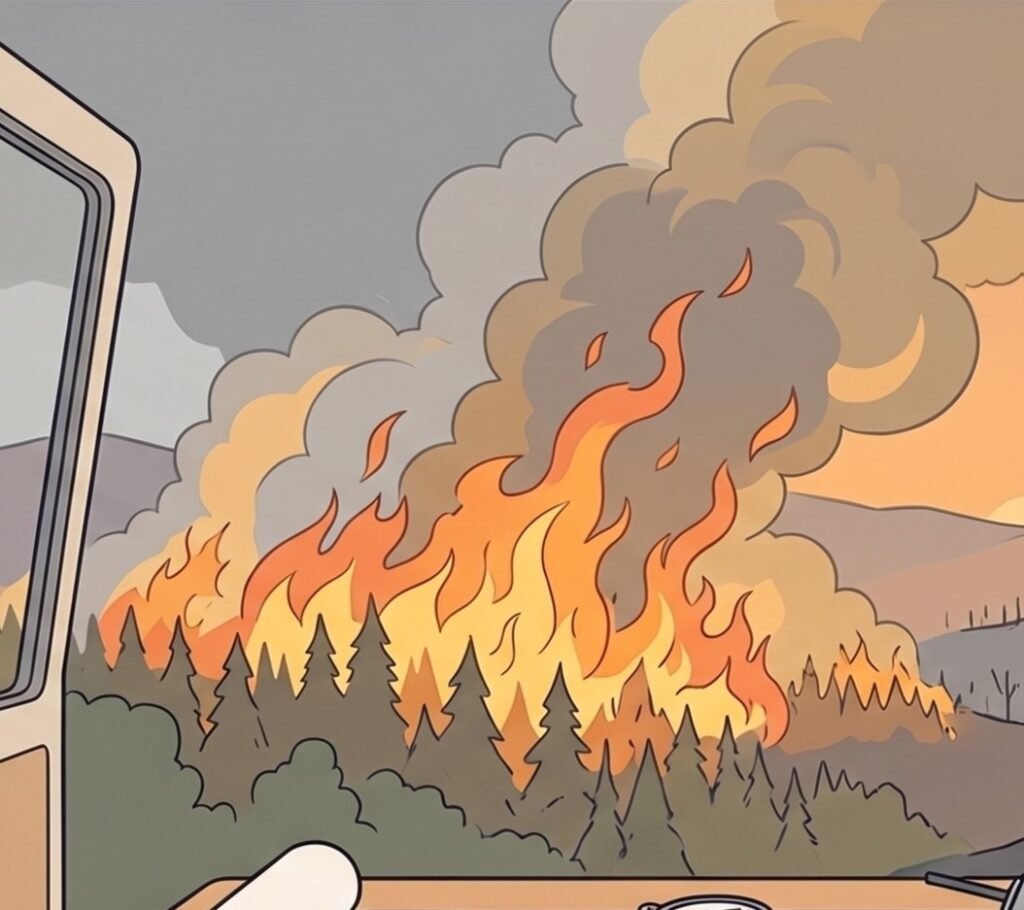
When the valley fills with smoke and parts of the region are on evacuation alert, almost everyone sleeps badly. Air quality, heat and the background hum of checking the map all disrupt sleep, and that disruption is a reasonable response to the conditions rather than a disorder. Treating it as insomnia in August is usually the wrong move.
What matters is October. If the smoke clears, the alerts lift, and the bad nights carry on regardless, the problem has stopped being about air quality and started maintaining itself. That is the point where CBT-I applies. More on wildfire smoke and sleep in BC, and on how to tell whether what you have is insomnia.
What this costs in the Okanagan
- Interior Health, municipal and school district plans in BC are commonly administered through Pacific Blue Cross or Sun Life. BC CBT-I direct bills both, so there is nothing to submit and nothing to wait for.
- Seasonal, hospitality, agricultural and self-employed work frequently comes with no extended health coverage at all. A limited number of sliding scale spots are held for this, starting at a 40 percent reduction, for reduced income, income assistance or PWD, or other circumstances. Get in touch and ask rather than assuming it is out of reach.
- If you are retired, MSP does not cover counselling. Some public sector retiree plans carry a counselling allowance, so check before you rule it out. Where there is no plan, the sliding scale applies here too.
- Sessions are delivered by a Registered Clinical Counsellor (RCC #21951), the designation most BC extended health plans cover, and are GST exempt. Here is exactly what to ask your provider before you book.

Your Therapist
Graeme Thompson, RCC
I started BC CBT-I because there is a glaring need for qualified sleep therapists in British Columbia. I’ve seen the life-changing difference it makes when someone finally overcomes their insomnia. It’s the difference between surviving and actually thriving.
I’m excited to be part of that transformation with you.
This isn't alternative medicine.
It's the most researched treatment for insomnia in the world. Every major medical guideline recommends it.
"CBT-I should be the first-line treatment for all adults with chronic insomnia."American College of Physicians, Annals of Internal Medicine
"Strong recommendation for CBT-I as the treatment of choice for insomnia disorder."World Sleep Society Position Statement, Sleep Medicine (2023)
"CBT-I is now unequivocally recommended as first-line treatment for insomnia."European Sleep Research Society, Journal of Sleep Research (2023)
Three steps to better sleep.
Book a free consult
A 15 minute conversation to understand your sleep challenges and see if CBT-I is right for you. No commitment, no pressure.
Start your personalized program
We'll track your sleep data and build a treatment plan tailored to you. Weekly sessions, online, on your schedule.
Sleep again
Most people see meaningful improvement within 6 to 8 sessions. The skills you learn stay with you. No ongoing medication, no dependency.
You Don't Have to Keep Living Like This
Book a free consultation and let’s talk about how CBT-I can help you sleep again.
Frequently asked questions
About CBT-I and online therapy in Kelowna, British Columbia.