CBT-I for Insomnia in Vancouver
Cognitive Behavioural Therapy for Insomnia is the first-line treatment recommended by every major sleep medicine body worldwide. Treatment is accessible online to residents across Vancouver, from the Downtown, to Kitsilano, Mount Pleasant, East Van, and the broader Lower Mainland.
Are you a clinician? Refer a patient here
4 in 5
patients improve their sleep with CBT-I
Registered Clinical Counsellor
Virtual sessions available across B.c.
Flexible fees & Insurance accepted
Backed by Hundreds of studies
Online CBT-I for Vancouver residents
Cognitive Behavioural Therapy for Insomnia isn't sleep hygiene tips or relaxation podcasts. It's a structured, short-term therapy that targets the root causes of why you can't sleep, not just the symptoms.
Whether you are navigating the high-stress demands of Vancouver's fast-paced professional sectors or dealing with the impact of our notoriously dark, overcast winters on your circadian rhythm, our targeted therapy helps you regain control. We provide specialized, virtual insomnia treatment tailored specifically for adults living and working in Metro Vancouver.
Instead of relying on pills that stop working, CBT-I retrains the patterns that keep insomnia going. It works by rebuilding your body's natural ability to sleep.
Rebuild your sleep drive
Your body has a natural pressure to sleep. Insomnia disrupts it. We restore it so sleep comes naturally again.
Break the bed-wakefulness connection
Your brain has learned to associate bed with being awake. We reverse that so your bed means sleep again.
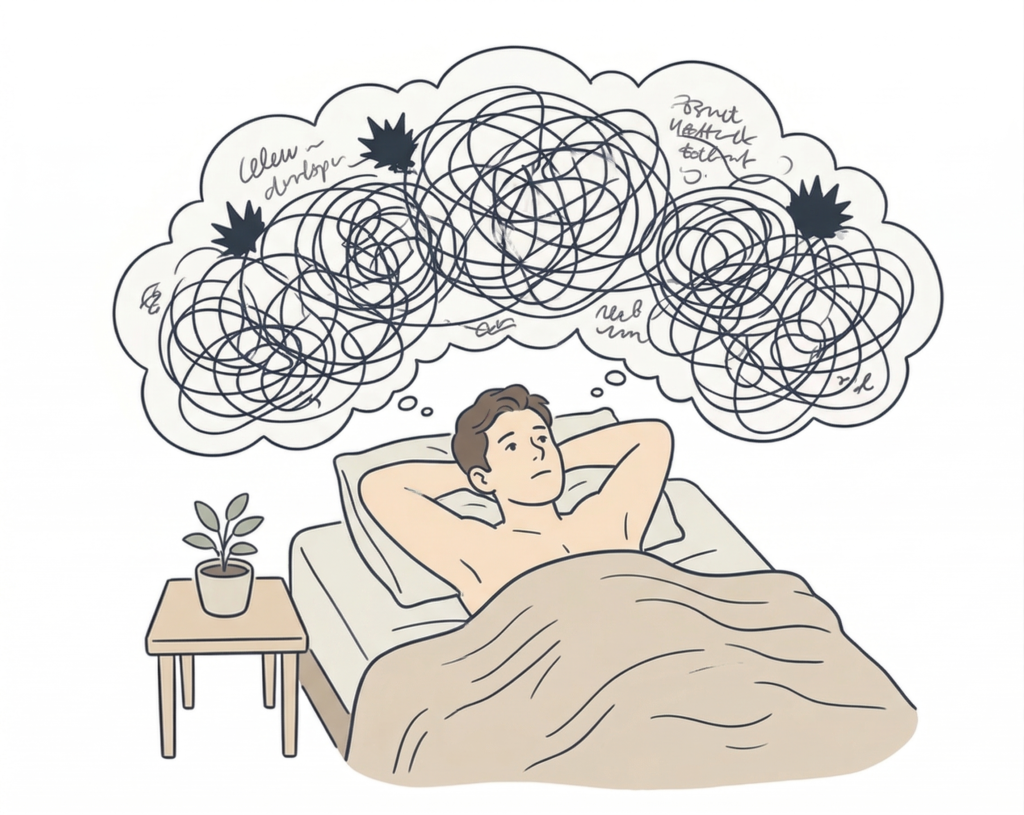
Quiet the racing mind
The worry, the clock-watching, the dread of another bad night. We address the thought patterns that fuel insomnia.
At BC CBT-I, we integrate CBT-I with Acceptance and Commitment Therapy (ACT) for the most effective, flexible approach to restoring your sleep.
Who this affects in Vancouver
A lot of this city works
while the rest of it sleeps.
Vancouver Coastal Health and Providence run two of the province's busiest hospitals without closing. Port terminals work around the clock. Coast Mountain Bus Company and SkyTrain are moving people before five in the morning and after one at night. And as the third largest film and television production centre in North America, this city employs thousands of crew whose call time moves later every day of the week by design. None of that causes insomnia on its own. What irregular hours do is narrow the margin, so a rough stretch that a nine to five worker would sleep off instead becomes a pattern that outlasts whatever started it.
Hospital and health authority staff
VGH, St Paul's and the community sites run continuously. Nurses, care aides and allied health staff rotating from days to nights lose sleep on the turnaround, and twelve-hour rotations compress the recovery window at both ends of the stretch off.
Film and television crews
Camera wrap drifts later across the shooting week, so crew are chasing a bedtime that never settles. Add a block of night shoots and the pattern has more in common with repeated jet lag than with a work schedule. Then the show wraps and the body clock has to be rebuilt from scratch.
Transit and port operations
The TransLink enterprise employs roughly 9,600 people across buses, SkyTrain and Transit Police, much of it on split shifts and early sign-ons. Port terminals run continuously, and dispatch makes the next shift difficult to plan sleep around.
Police, fire and paramedics
VPD, Vancouver Fire Rescue and BCEHS crews come off shift with arousal still elevated, and downtown call volume gives it little chance to settle. That failure to wind down after the shift ends is the mechanism that converts occasional bad nights into chronic insomnia.
Tech, finance and professional services
A different mechanism producing the same complaint. Fixed hours, but a mind that keeps working after the laptop closes. This group usually has the strongest benefits coverage in the city and the longest history of trying to solve it alone first.
Two different problems get called insomnia here
Crew and operators on drifting or rotating schedules often have a circadian problem: the body clock is out of step with the hours being asked of it, and sleep would be fine if it were allowed to happen at the time the body wants. Someone downtown on fixed hours, lying awake at eleven with a mind that will not stop, has insomnia itself. The two feel similar from the inside and need close to opposite treatment.
Sleep restriction is the strongest tool in CBT-I, and used on a circadian problem it makes things worse. Working out which one you have comes first, before any part of the protocol starts. How the two are told apart, why the mind races at bedtime, and which jobs in BC carry the highest insomnia rates.
What this costs with your plan
- Health authority, municipal, transit and school district plans in BC are commonly administered through Pacific Blue Cross or Sun Life. BC CBT-I direct bills both, so there is nothing to submit and nothing to wait for.
- Film and television crew covered through a union health and welfare plan should confirm eligibility before booking. These plans are funded by hours banked on production, so coverage moves with how much you have worked in the plan year rather than sitting at a fixed amount.
- Employer plans in tech and finance often pair a counselling allowance with a health spending account. If the counselling maximum runs out partway through treatment, the spending account will usually absorb the rest.
- Sessions are delivered by a Registered Clinical Counsellor (RCC #21951), the designation most BC extended health plans cover, and are GST exempt. Here is exactly what to ask your provider before you book.

Your Therapist
Graeme Thompson, RCC
I started BC CBT-I because there is a glaring need for qualified sleep therapists in British Columbia. I’ve seen the life-changing difference it makes when someone finally overcomes their insomnia. It’s the difference between surviving and actually thriving.
I’m excited to be part of that transformation with you.
This isn't alternative medicine.
It's the most researched treatment for insomnia in the world. Every major medical guideline recommends it.
"CBT-I should be the first-line treatment for all adults with chronic insomnia."American College of Physicians, Annals of Internal Medicine
"Strong recommendation for CBT-I as the treatment of choice for insomnia disorder."World Sleep Society Position Statement, Sleep Medicine (2023)
"CBT-I is now unequivocally recommended as first-line treatment for insomnia."European Sleep Research Society, Journal of Sleep Research (2023)
Three steps to better sleep.
Book a free consult
A 15 minute conversation to understand your sleep challenges and see if CBT-I is right for you. No commitment, no pressure.
Start your personalized program
We'll track your sleep data and build a treatment plan tailored to you. Weekly sessions, online, on your schedule.
Sleep again
Most people see meaningful improvement within 6 to 8 sessions. The skills you learn stay with you. No ongoing medication, no dependency.
You Don't Have to Keep Living Like This
Book a free consultation and let’s talk about how CBT-I can help you sleep again.
Frequently asked questions
About CBT-I and online therapy in Vancouver, British Columbia.